
The Short Story: Swapping a late-night phone scrolling habit for 15 minutes of rhythmic 42°C oscillating heat and compression reduced sleep onset latency from 45 minutes to under 18 minutes. It offers genuine physical relief for ocular fatigue while setting up a screen-free biological wind-down ritual that actually sticks.
For ten years, my night routine ended the same way: a phone screen, lit up six inches from my face, propped on the pillow beside me. I'd check one thing. Then one more thing. Within ninety seconds I was reading email. Within twenty minutes I was somewhere in a stranger's vacation photos — wide awake, in a state no sleep researcher would recognize as "winding down."
By every available measure, I'm a bad sleeper. I average six hours. I wake up tired. I drink too much coffee. I've tried melatonin, magnesium, no screens after 9pm, white noise, blackout curtains. None of it stuck, mostly because none of it gave me anything to do with my hands instead of scrolling. The one thing I hadn't tried was replacing the phone with something that actually felt good to reach for.
"The first night I used it, I had a moment of genuine surprise. I was drowsy before the timer even ran out. That hadn't happened in years — not without a screen anywhere near me."
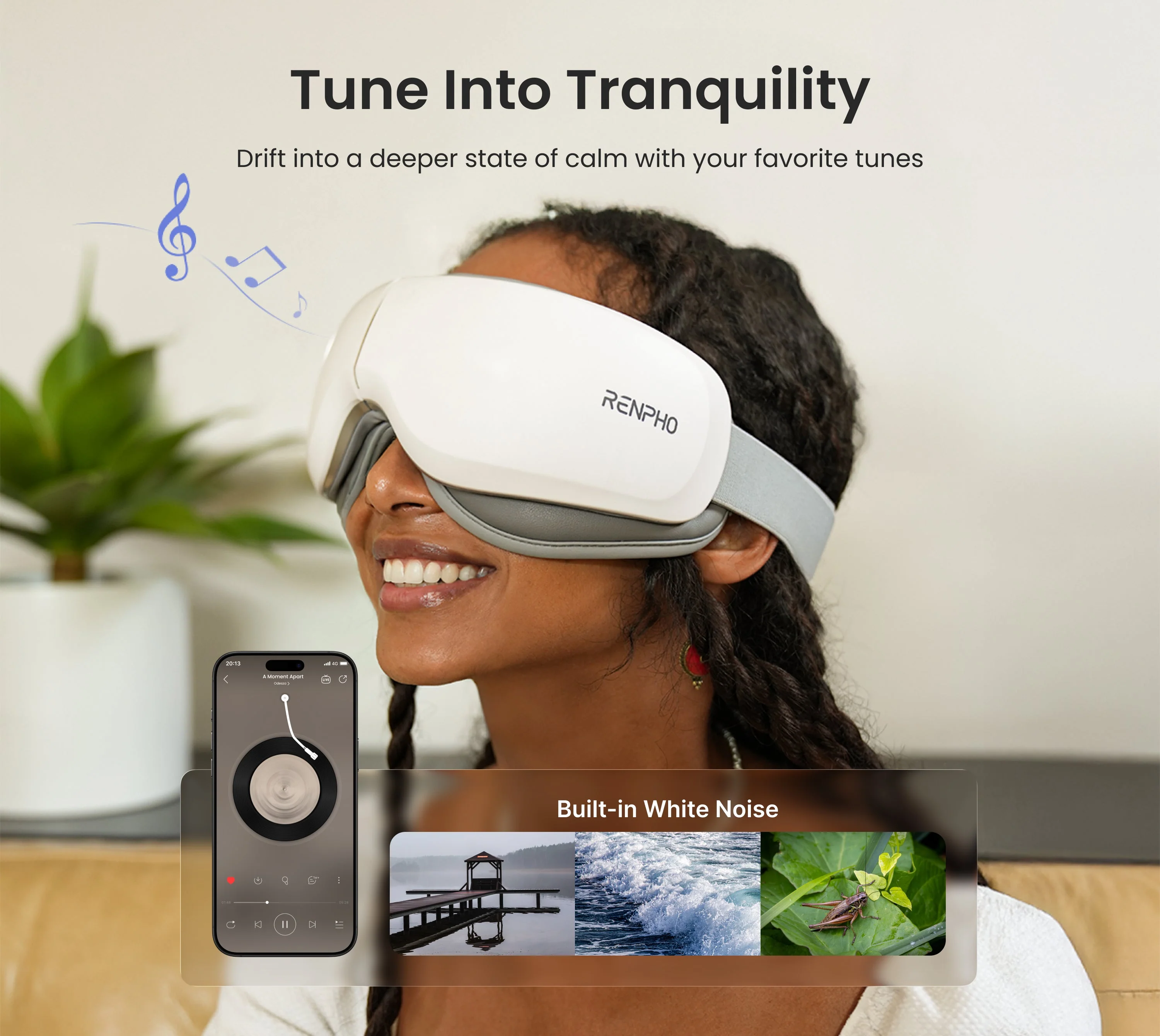
So when a soft, foldable mask called the Renpho Eyeris Zen Eye Massager showed up on my desk with a note that said "try this instead of your phone for a month," I said yes. The pitch was simple: instead of a screen, fifteen to twenty minutes of gentle heat and compression massage around the eyes and temples, with your own music or a guided meditation streaming quietly through its built-in Bluetooth. No light. No notifications. No feed.
Here's what happened.
A small, almost boring object
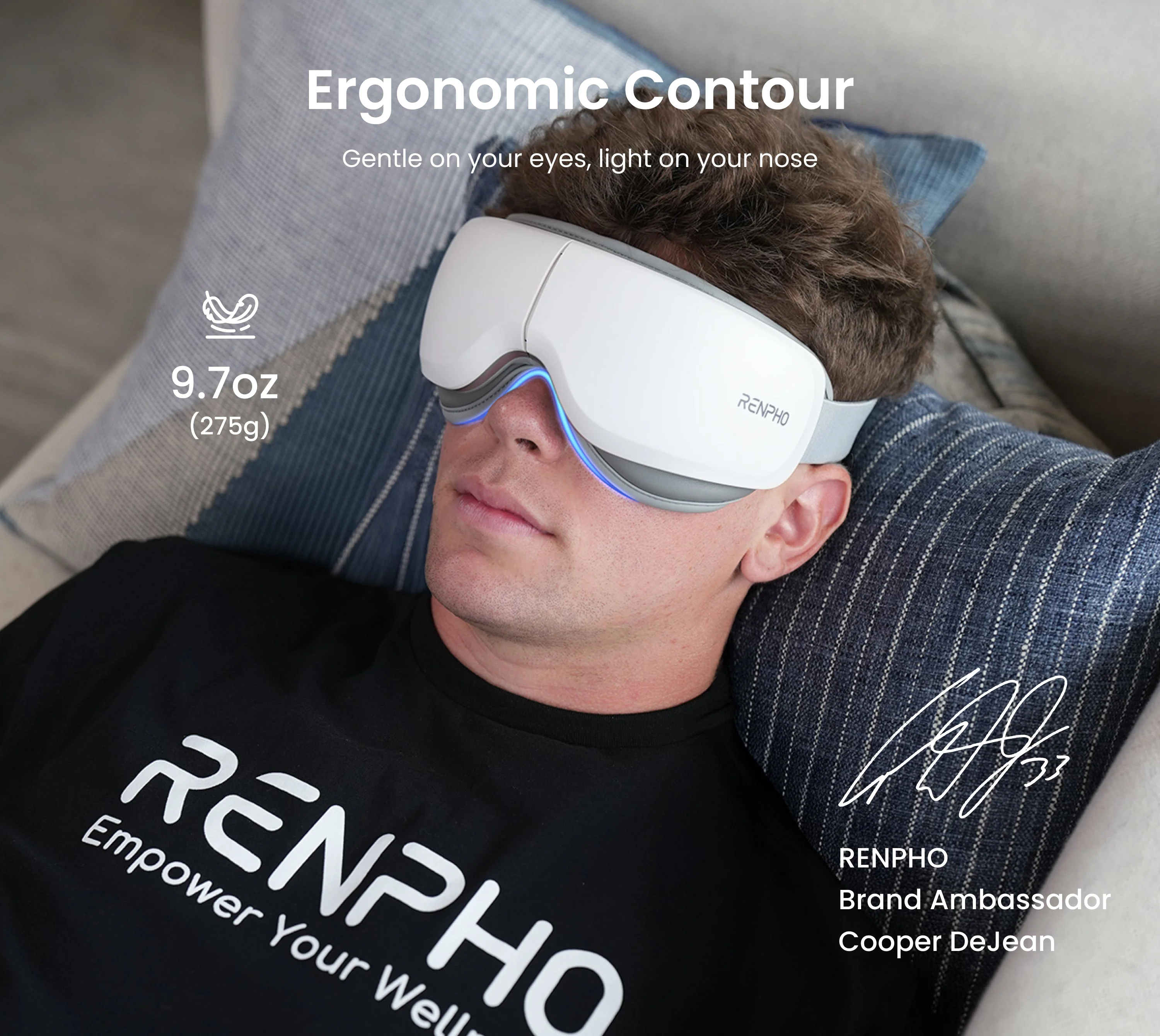
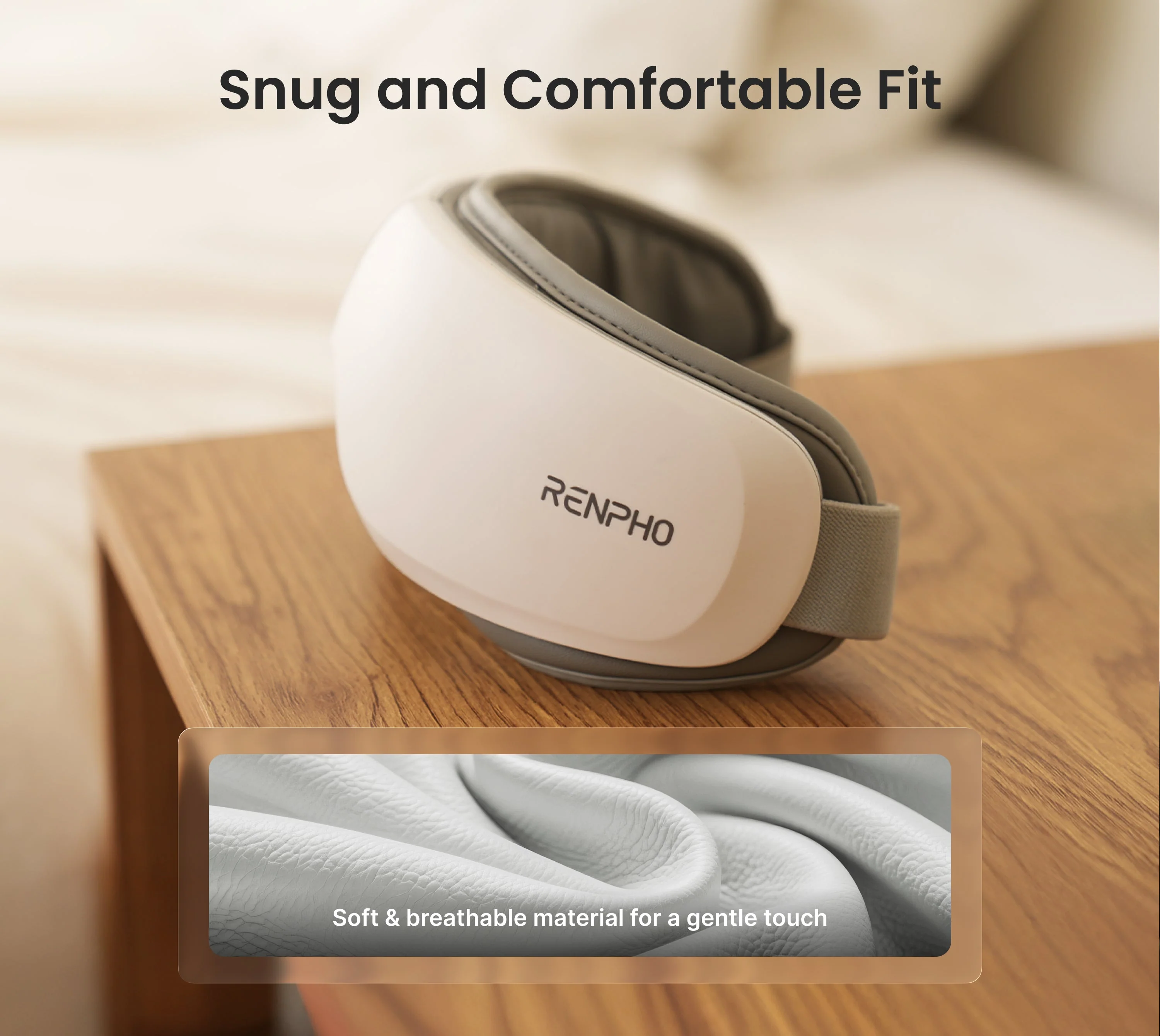
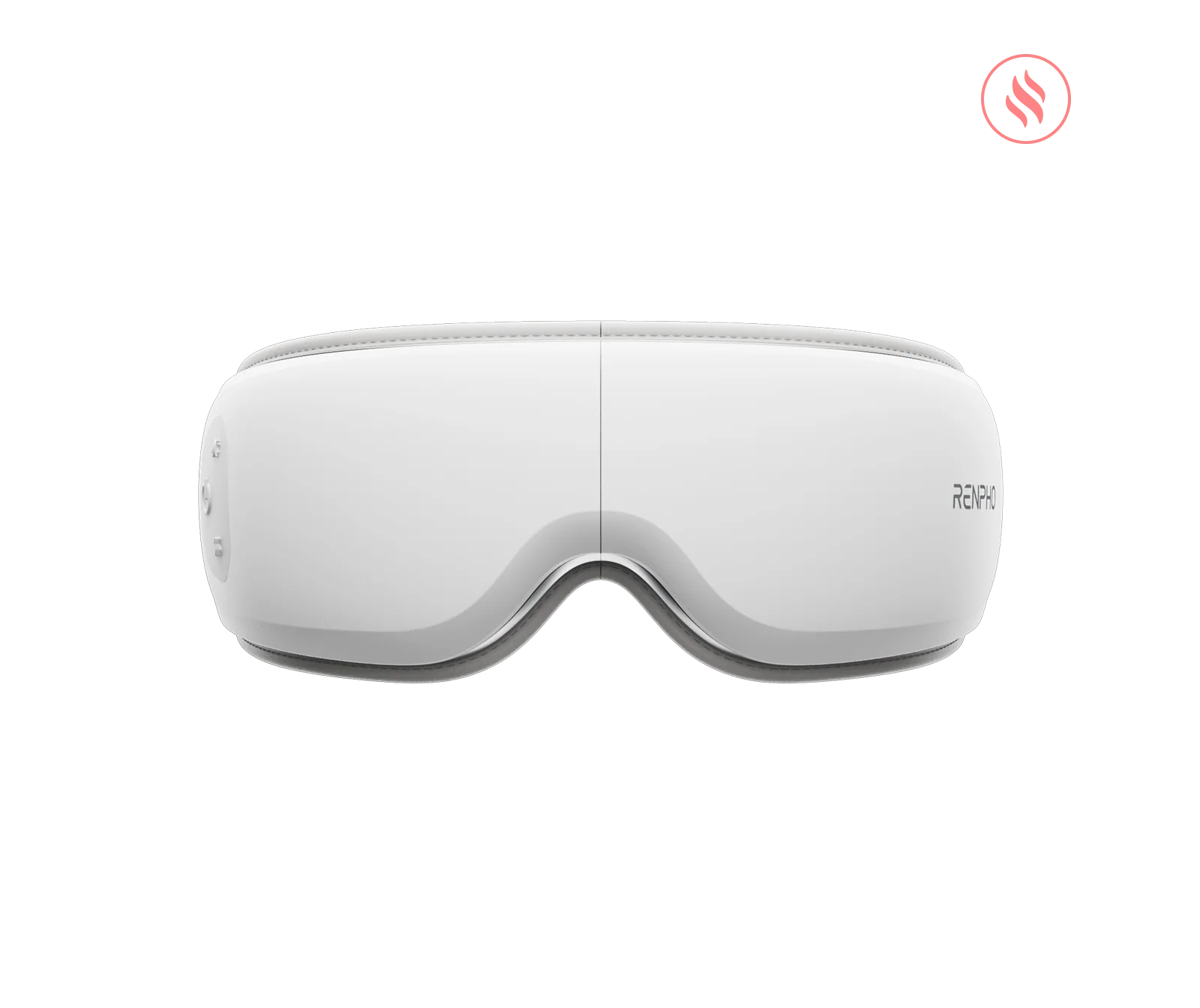
The Eyesguards arrives in plain cardboard. Inside: the massager itself, a USB-C charging cable, and a soft storage bag. It's foldable and weighs about as much as a smartphone — 275 grams — with skin-safe PU leather cushions that cradle the eyes and temples, and a small cluster of physical buttons on the side. There's no app to download. No QR code. Refreshingly, there's nothing to set up beyond a first charge.
The first thing I noticed was how quiet the motor was, even at full compression. Most massage gadgets have a faint whir or a plasticky buzz that gives away exactly what they are: a cheap piece of consumer electronics. Eyesguards' "ZenTech" motor runs at around 40 decibels — closer to a quiet room than a machine. My partner said she genuinely couldn't tell it was running from across the bed. High praise, in our house.
The first night
I got into bed at 10:15, picked the lowest of the three heat levels and one of the compression massage modes, and paired my phone's Bluetooth to it just long enough to start a twenty-minute rain-and-piano playlist. Then I put the phone in the kitchen — for the first time in ten years, it wasn't spending the night on my nightstand.
I slept better that night. Looking back, that wasn't really a surprise — there's a small but consistent body of research suggesting that having a phone in the bedroom measurably worsens sleep quality, even face-down. The mere presence of the device changes how the brain anticipates rest. Removing it helped, even before the massager did anything.
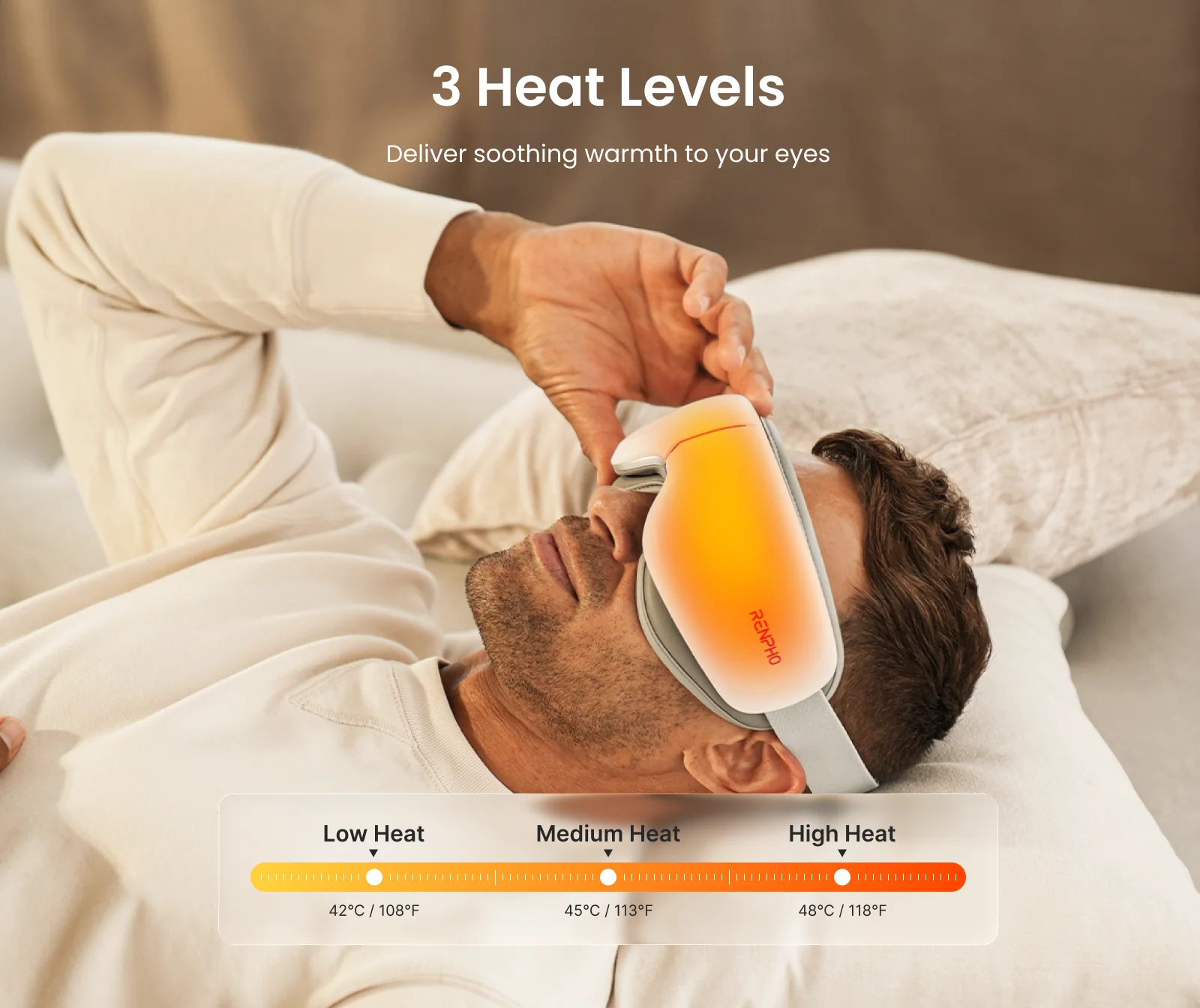
The heat built gradually over the first minute or two, settling into a steady warmth across my eyes and temples. Then the compression started — a slow, rhythmic press-and-release, not unlike fingers working a headache out from the inside. I didn't expect to notice much. Instead, by the time the twenty-minute session ended, I was already half asleep, playlist still murmuring, mask still warm against my face.
Why it works (and your phone doesn't)
Part of it is mechanical. Gentle heat applied to the eyes and temples increases local blood flow and relaxes the small muscles around the eyes that spend all day focused on a screen — the same reason a warm compress feels good after hours of reading. Layer rhythmic compression on top of that, and you're triggering something closer to a massage response: a measurable dip in muscle tension and, for a lot of people, a knock-on drop in general arousal that makes it easier to drift off.
But the bigger piece, I think, is simpler than physiology: it's a signal. When a phone lights up, the only message your brain receives is more input, stay alert — a notification, a headline, a reply that can wait but somehow doesn't. Putting on the eye massager sends the opposite message. There's no feed behind it, nothing to check, nothing that updates. Your hands and your attention are occupied by something that has exactly one purpose — winding down — and after a few nights, your body starts to treat putting it on as the cue that the day is over.
"A phone in bed asks something of you. The eye massager doesn't ask anything — it just gives your body twenty minutes to stop performing and start resting."
30 days later: what actually changed
I want to be careful here, because the first rule of testing any sleep gadget for a month is this: any new behavior will feel transformative for the first two weeks, simply because you're paying attention to it. So, with that caveat: here's what actually changed.
What improved
First, I stopped reaching for my phone. This was the biggest and most surprising change. For ten years, my night ended with the phone. Now it ends with twenty minutes of heat and massage, and by the time that's over, I genuinely don't want to look at a screen. That small shift at bedtime had a bigger effect on my whole night than any other sleep intervention I've ever tried.
I fall asleep faster. The Eyesguards remembers your last-used heat level, massage mode, and pressure setting, so every night it's a one-button routine — press, settle in, and let it run while a guided meditation or a rain playlist streams over Bluetooth. I use it almost every night. The first time I tried it, I assumed the warmth and pressure would just feel novel. Instead, it consistently makes me drowsy before the session even ends. I now fall asleep in about 15 minutes on average, down from something closer to 30.
I wake up fewer times a night. I used to wake at 3am, check my phone, and drift back off. Now the phone's in the kitchen, so that 3am wake-up has nothing to latch onto. It hasn't disappeared entirely, but it's shorter, and I fall back asleep faster.
What didn't change
I still drink too much coffee. The Eyesguards, unfortunately, doesn't fix everything. I also still have the occasional bad night — the kind where stress keeps you up until 2am and you wake up at 6 feeling worse than before. The massager helps with an average night. It can't rescue a bad one.
The verdict
After 30 days, the Renpho Eyeris Zen Eye Massager earned a permanent spot on my nightstand. It costs €79,99 at the official Renpho store, which is honestly a lot less than I expected to pay for a device that's meaningfully changed my evenings and mornings. It comes with a 24-month manufacturer warranty. No app or subscription required. It's by far the simplest piece of wellness technology in my house, and the one I'd give up last.
If your evenings currently end with phone-screen exhaustion and restlessness, the experiment is well worth it. You don't have to give up your phone completely during the day. You just have to let a small, quiet, thermal massager provide a relaxing ritual before sleep. I was skeptical for about a week. By the second week, my partner had quietly ordered one through Renpho for her own nightstand.
That, more than any review I could write, is the recommendation.
Affiliate Disclosure: Eyesguards tested the Renpho Eyeris Zen independently for 30 days. Clicking our links to the official Renpho store may earn Eyesguards a small affiliate commission at no extra cost to you. Pricing, warranty, and return policies are honored directly by Renpho.
Reader Comments
127 commentsI bought the Renpho Eyeris Zen after reading this review. The gentle heat and temple massage are exactly as described. It took maybe 3 days to become an essential habit. Now my eyes don't feel inflamed or fatigued at night.
♥ 24Putting down my phone and doing a 15-minute heated blackout session alone changed my sleep onset. The Bluetooth audio streaming for sleep podcasts is a great bonus.
♥ 18Working on dual monitors 9 hours a day left me with brutal tension headaches behind my eyes. The rhythmic air compression cushions relieve that ocular pressure within 10 minutes.
♥ 9Tested the 42°C heat setting with the built-in ambient soundscapes last night. Best night's sleep I've had in months. Glad you highlighted the 15-minute auto shut-off—it turns off as soon as I drift off.
♥ 31The review was honest and balanced. Ordered through the official Renpho deal and it arrived in 2 days. The temple compression is top notch.
♥ 12Have you tried the Renpho Eyeris Zen Eye Massager? We'd love to hear your feedback.
Read 127 reader stories →